
Find the vibration path behind building noise
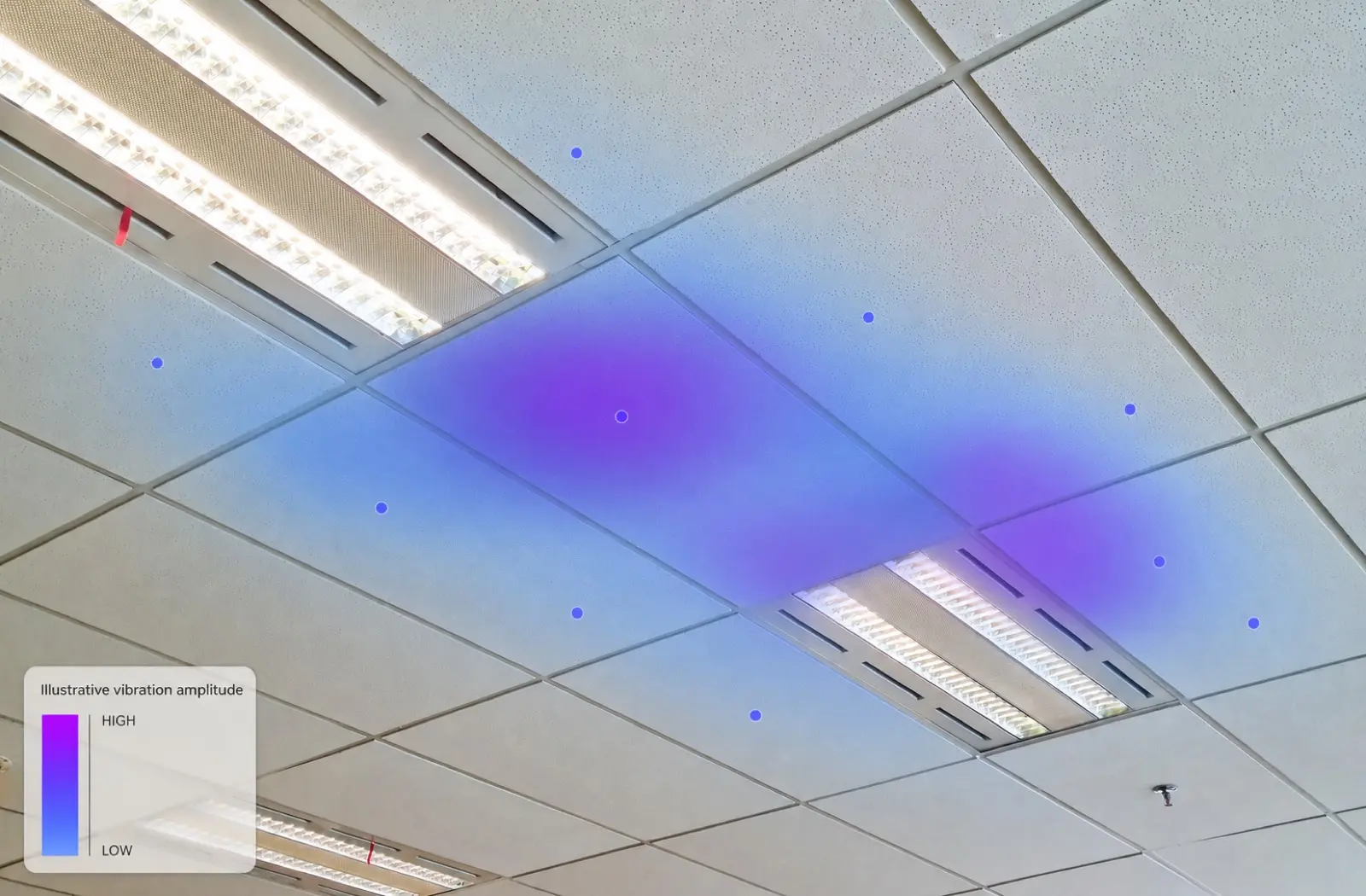
Measure the building elements behind the acoustic result
Where parallel measurement changes the decision
Flanking paths at junctions
See whether energy is crossing through the panel or entering through an edge, fixing or adjacent element.
Low-frequency wall and glazing response
Map the surfaces behind a persistent boom, rumble or resonance.
Floors and lightweight ceilings
Investigate response to impact, footfall and operational excitation where the construction detail matters.
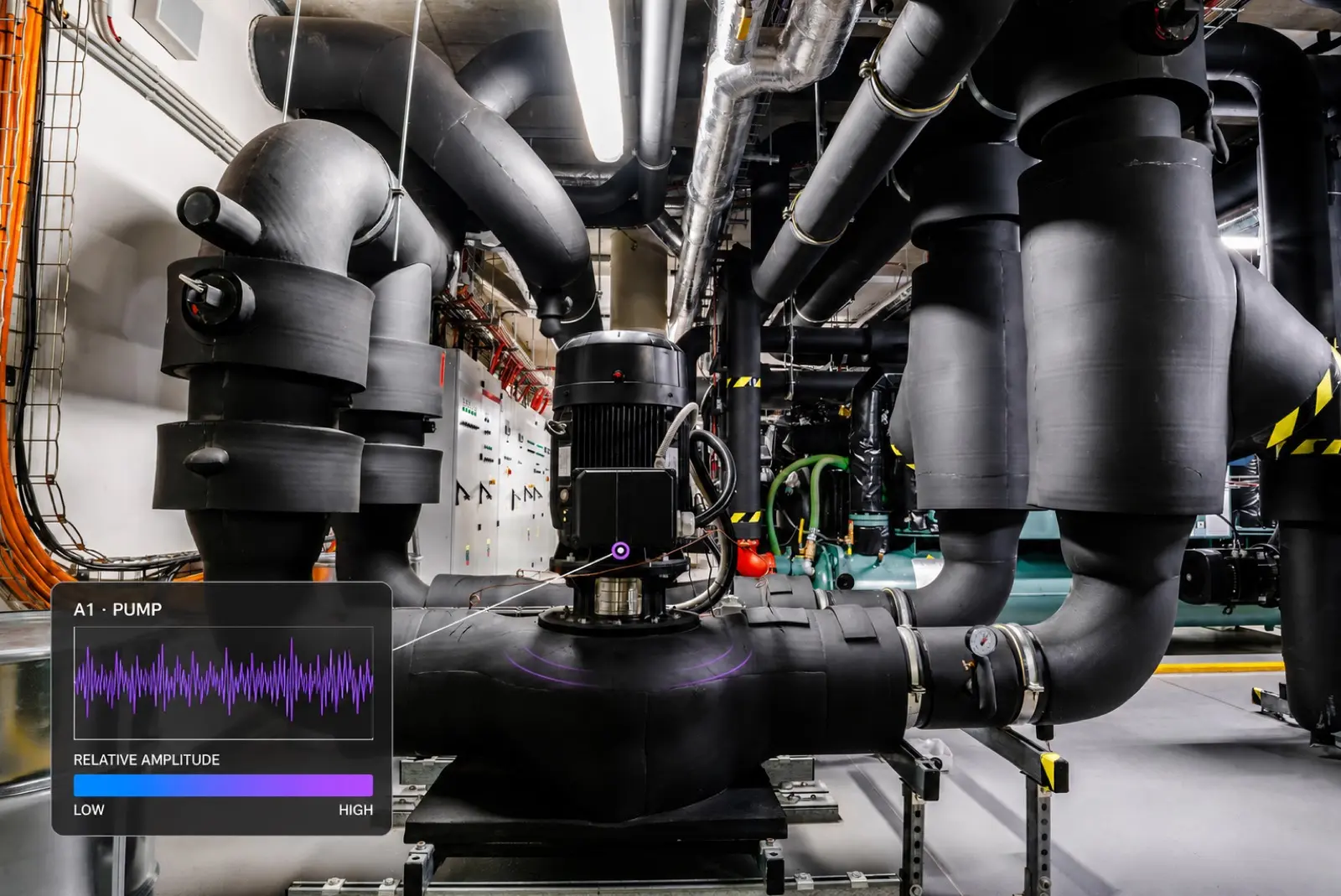
HVAC and building-services vibration
Follow vibration from fan, pump, ductwork or enclosure through mounts and supports into the building.
Follow plant vibration from source to room
Use the right view of building acoustics
Microphones — acoustic outcome
Measure the sound at the receiver. Use them for field ratings, acceptance and before-and-after proof.
Acoustic cameras — airborne source
Show where airborne sound is radiating. Use them to find sound sources, then add vibration data when the structure is the suspected path.
Accelerometers — selected-point motion
Capture motion at selected points. Best for reference measurements and known critical components.
Laser RADAR — spatial structural response
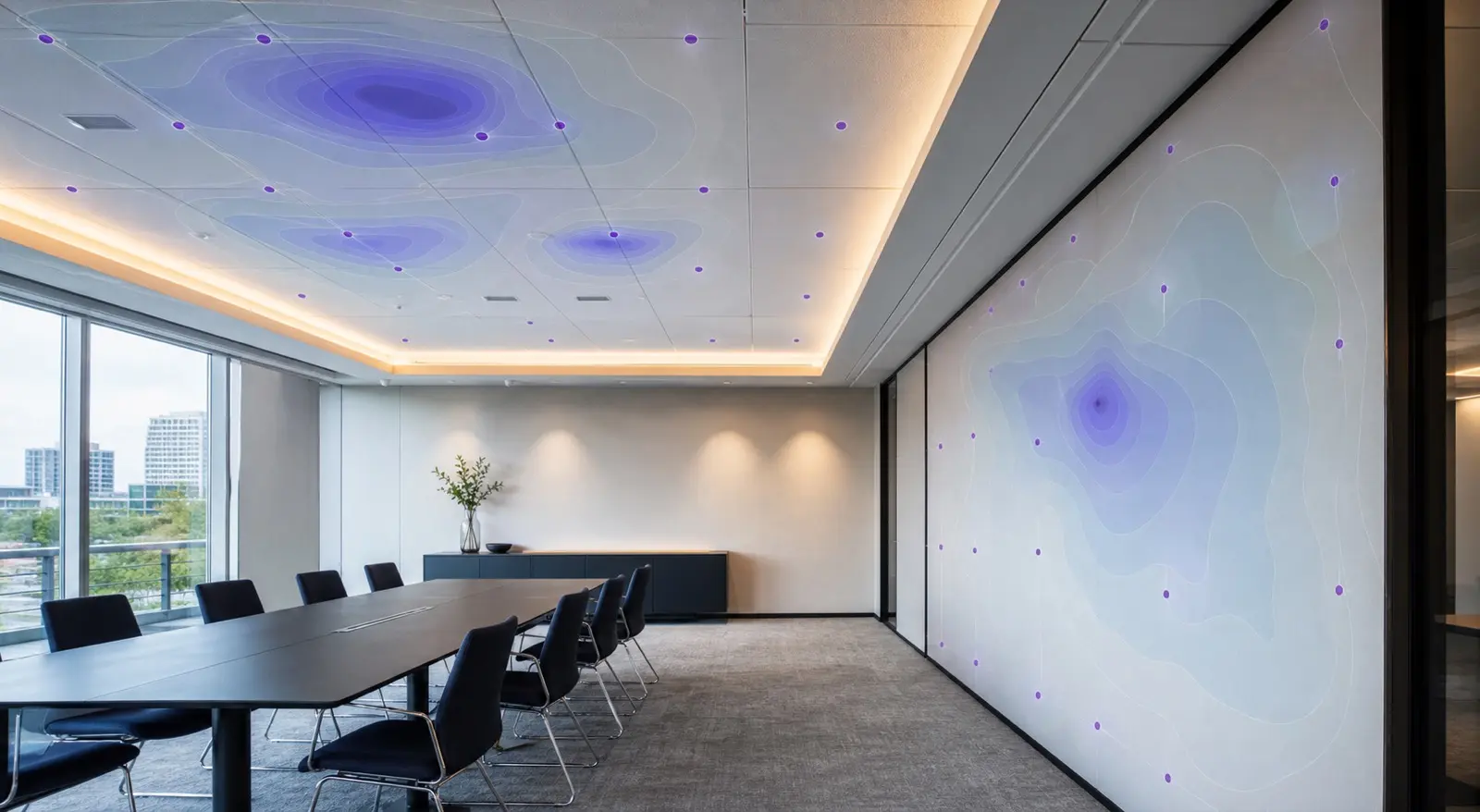
Map structural motion across the surface. Use it to locate active panels, junctions, mounts and service paths.
Bring geometry and motion into the acoustic investigation
Turn a noise complaint into an engineering decision
Choose your next step
Laser RADAR vs accelerometers
Compare contact sensing with spatial stand-off measurement for the problem in front of you.
Explore the technology
See how multi-beam Laser RADAR turns geometry and motion into a practical measurement workflow.
Discuss your application
Bring the construction detail, complaint or plant-room problem to an applications engineer.