SEE MORE · KNOW MORE

Find the vibration path behind building noise
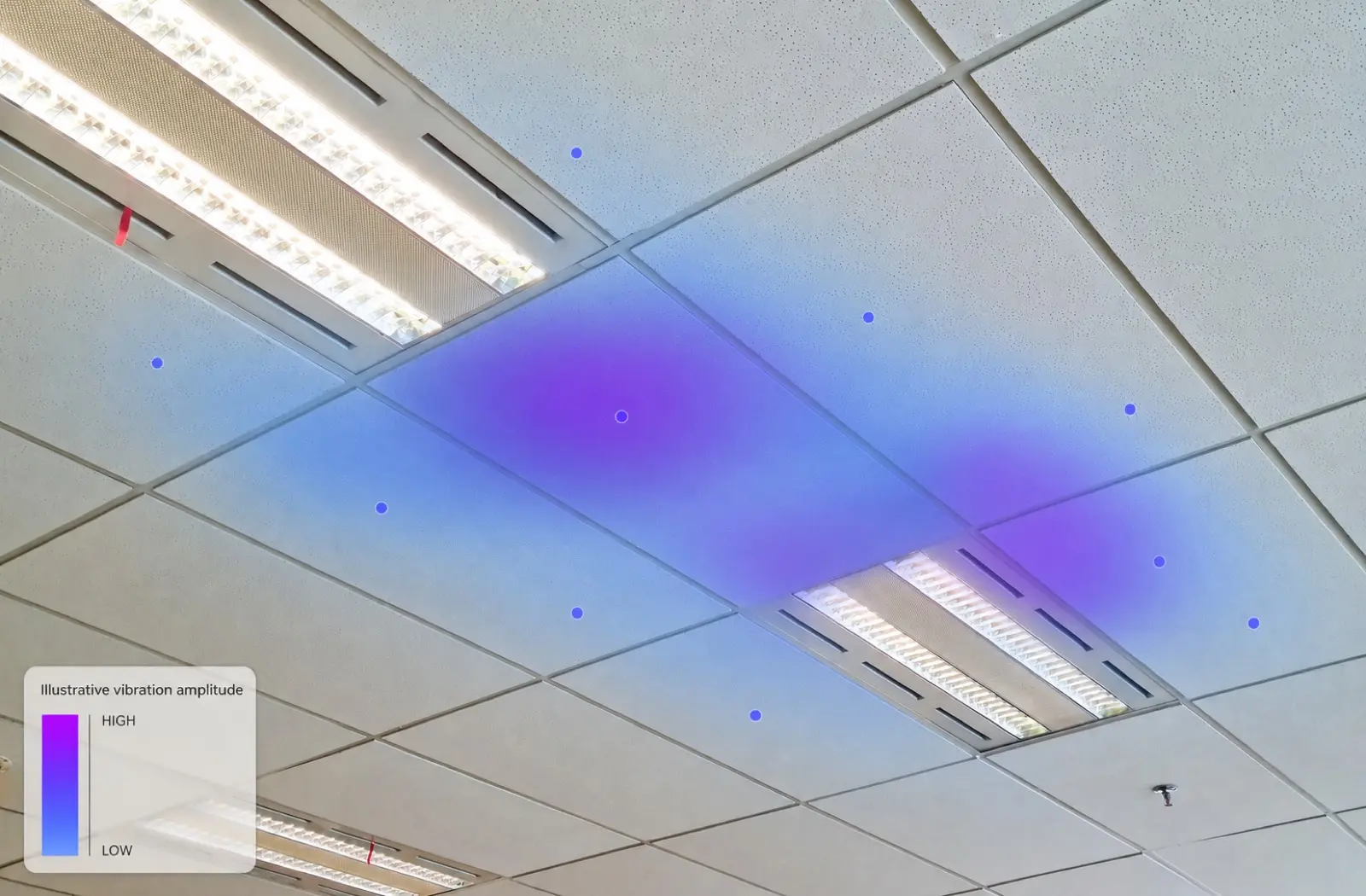
Ommatidia Laser RADAR measures geometry and vibration across many points in parallel. Map motion across walls, ceilings, façades and plant-room equipment to trace the path from symptom to fix.
building acoustics ceiling heatmap v1 web

Measure the building elements behind the acoustic result

An acoustic rating shows how a space performs. Ommatidia Laser RADAR adds high-density geometry and motion information so you can see which panel, junction, mount or service connection is active. Use parallel multi-point measurement to examine ceilings, partitions, glazing, floors and service enclosures as systems—and focus the next design or remedial action.

Where parallel measurement changes the decision

Use Ommatidia Laser RADAR when the answer depends on where the structure is moving—not only on the sound level.

Flanking paths at junctions

See whether energy is crossing through the panel or entering through an edge, fixing or adjacent element.

Low-frequency wall and glazing response

Map the surfaces behind a persistent boom, rumble or resonance.

Floors and lightweight ceilings

Investigate response to impact, footfall and operational excitation where the construction detail matters.

HVAC and building-services vibration

Follow vibration from fan, pump, ductwork or enclosure through mounts and supports into the building.

Follow plant vibration from source to room
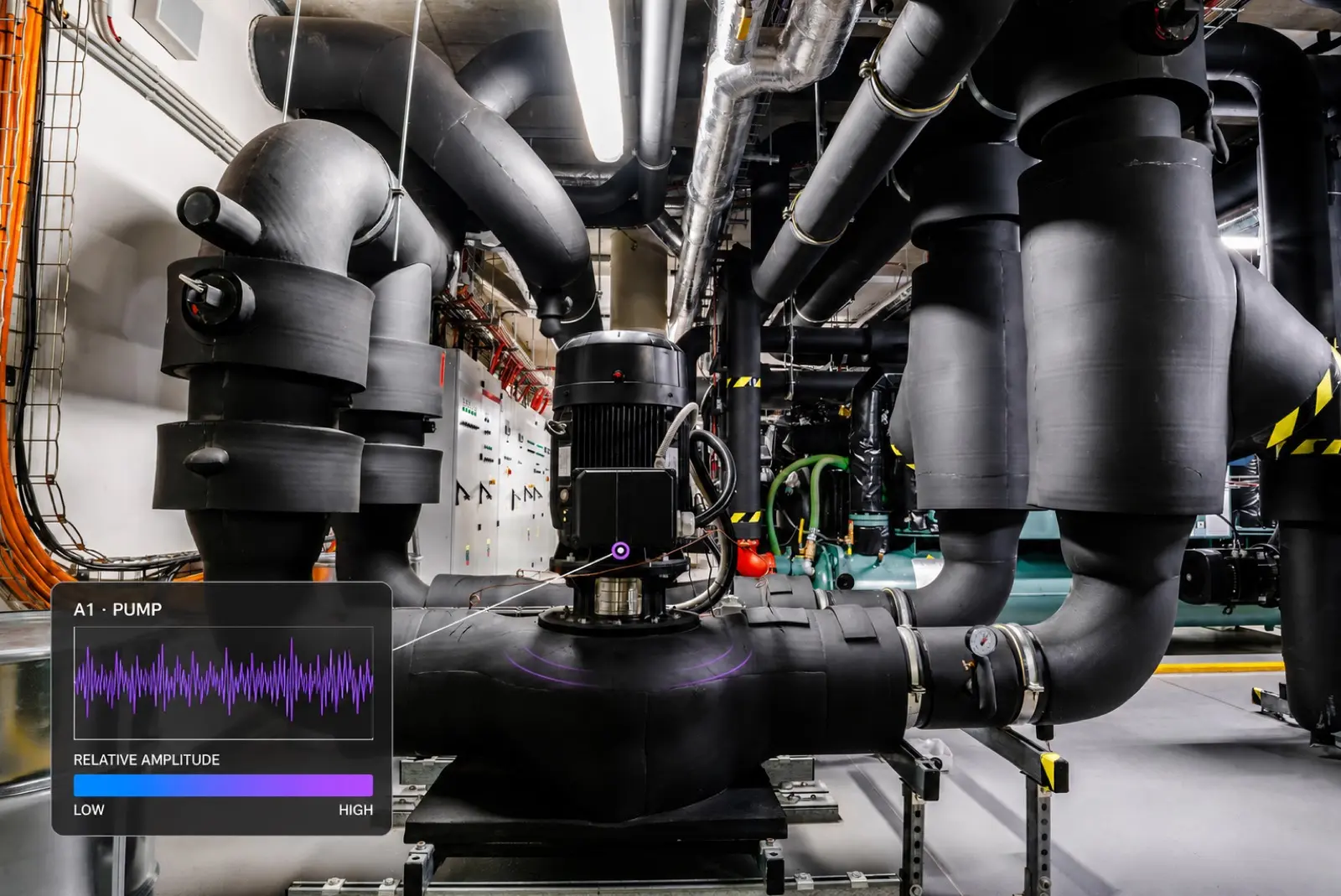
Laser RADAR maps vibration across fans, pumps and ductwork, then through mounts, supports, walls and ceilings. The result is a clearer path to isolation, damping or connection-detail decisions.
Plan around the operating condition, the receiving space and the surfaces that connect them.
building acoustics hvac analysis panel v2 web

Use the right view of building acoustics

Microphones, acoustic cameras, accelerometers and Laser RADAR each answer a different question. Ommatidia adds the multi-point structural view.

Microphones — acoustic outcome

Measure the sound at the receiver. Use them for field ratings, acceptance and before-and-after proof.

Acoustic cameras — airborne source

Show where airborne sound is radiating. Use them to find sound sources, then add vibration data when the structure is the suspected path.

Accelerometers — selected-point motion

Capture motion at selected points. Best for reference measurements and known critical components.

Laser RADAR — spatial structural response

Map structural motion across the surface. Use it to locate active panels, junctions, mounts and service paths.

Bring geometry and motion into the acoustic investigation

A microphone tells you what a receiver hears. An Ommatidia Laser RADAR system adds geometry and motion across many points, helping you connect sound with the building element or connection behind it.

Turn a noise complaint into an engineering decision
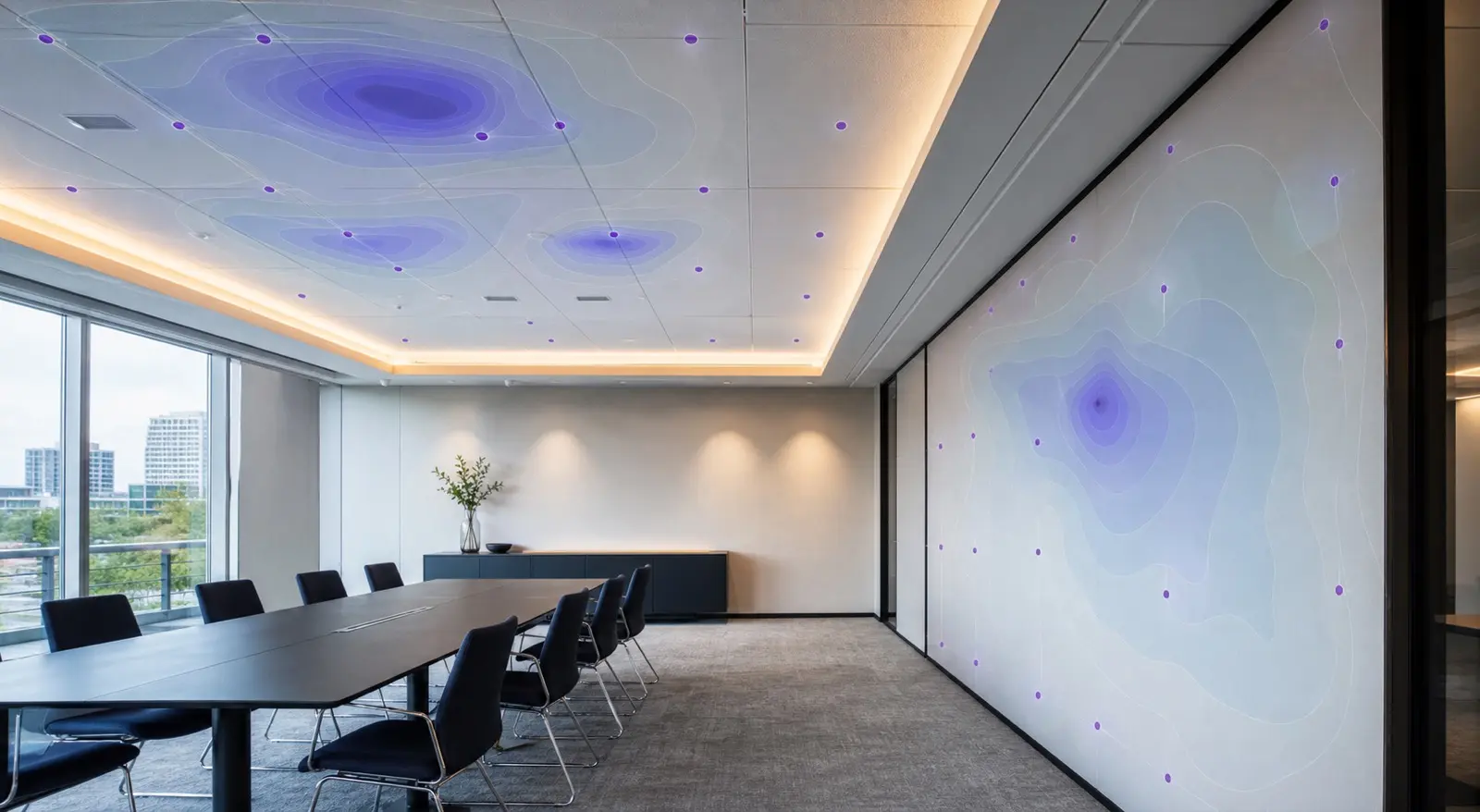
Use the spatial view when the cost of the wrong remedy is higher than the cost of finding the path.
building acoustics motion map v1 web
Illustrative structural response map used to guide a diagnostic measurement campaign.

Choose your next step

Compare approaches, explore Ommatidia Laser RADAR technology, or discuss your application with our team.

Laser RADAR vs accelerometers

Compare contact sensing with spatial stand-off measurement for the problem in front of you.

Explore the technology

See how multi-beam Laser RADAR turns geometry and motion into a practical measurement workflow.

Discuss your application

Bring the construction detail, complaint or plant-room problem to an applications engineer.

Building-acoustics questions, answered

Ommatidia Laser RADAR measures geometry and vibration across many points in parallel. It gives teams spatial position and velocity information for the structure or component they need to understand.
Laser Doppler vibrometry is one capability within Ommatidia Laser RADAR. It provides velocity and vibration information while the platform also supports geometry measurement across many points.
It shows which surfaces and connections are moving at the frequencies that matter. Use the map with acoustic data to pinpoint the panel, junction, mount or service route to investigate.
Add it when the measured result is clear but the fix is not. It helps investigate flanking paths, resonant surfaces and service connections before you commit to a remedial detail.
Yes. Low-frequency issues often involve large building elements, glazing, plant or lightweight systems. Mapping surface motion turns a rumble or boom into a location-specific investigation.
Yes. Map vibration around fans, pumps, ductwork, enclosures, mounts and supports to see how plant-room energy reaches the occupied space.
Accelerometers capture precise motion at selected points. Laser RADAR gives spatial surface coverage without mounting sensors across the structure. Use both when point validation and a wider structural picture are needed.
An acoustic camera localises airborne sound. Laser RADAR maps the structural response. Together, they help separate where sound is heard from the surface or connection driving it.
Yes. The survey is planned around the surface, line of sight and available access. It is particularly useful where mounting many sensors would slow down the investigation.
It can map the structural response during the operating condition that matters. For ongoing monitoring, use the diagnostic map to decide where permanent point instrumentation will add value.
Bring the problem location, construction detail, access, operating condition and any sound or vibration measurements already taken. That is enough to start a useful conversation.
Start with the project specification and the relevant field-test procedure. For technical context, review ISO 16283 field sound-insulation testing and ASHRAE guidance on noise and vibration control.

Discuss your building-acoustics application

Bring the element, symptom, access and any test data. We’ll help you plan a measurement workflow that gives your team the geometry and motion information it needs.