
See how instruments create their sound
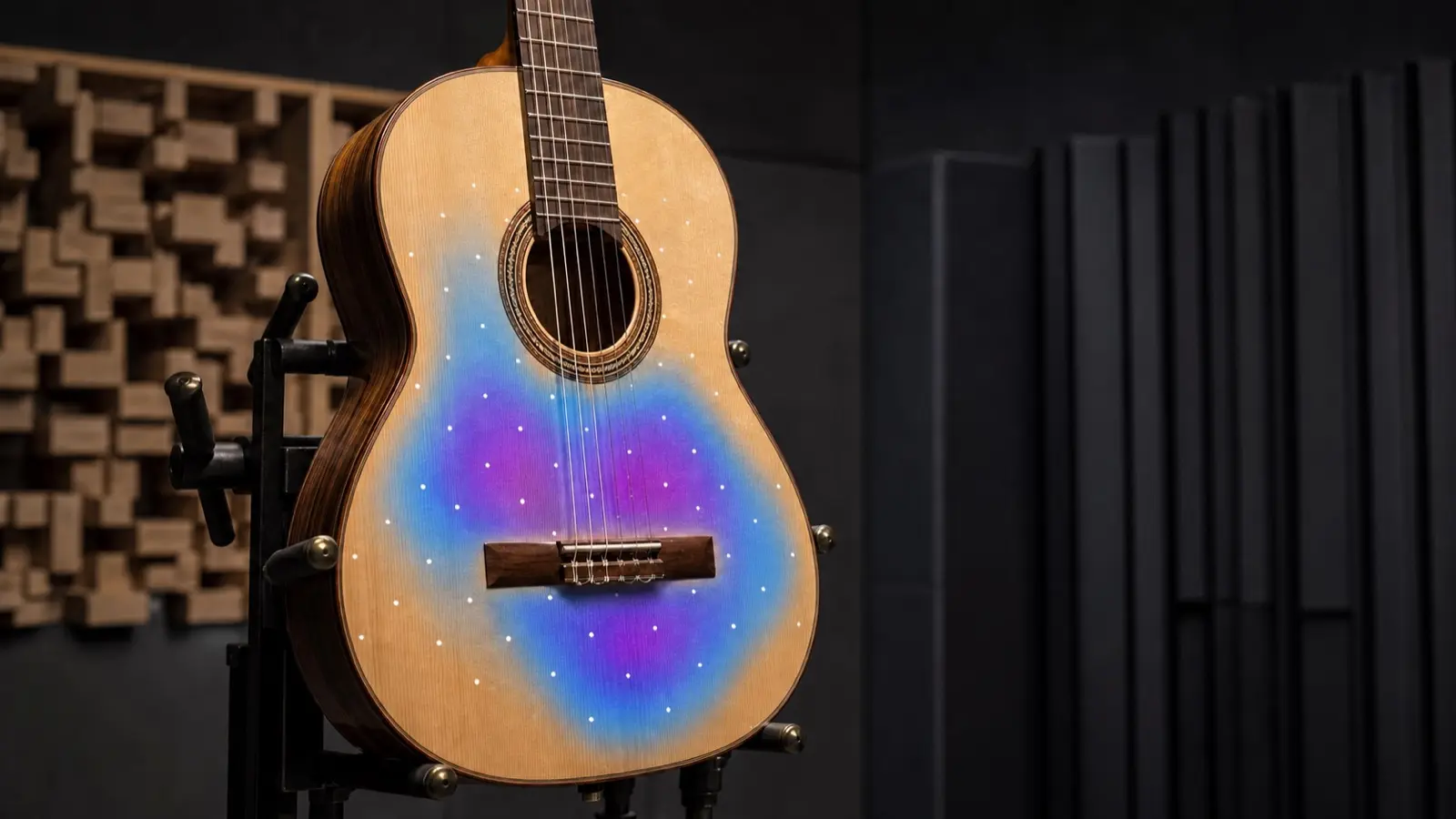
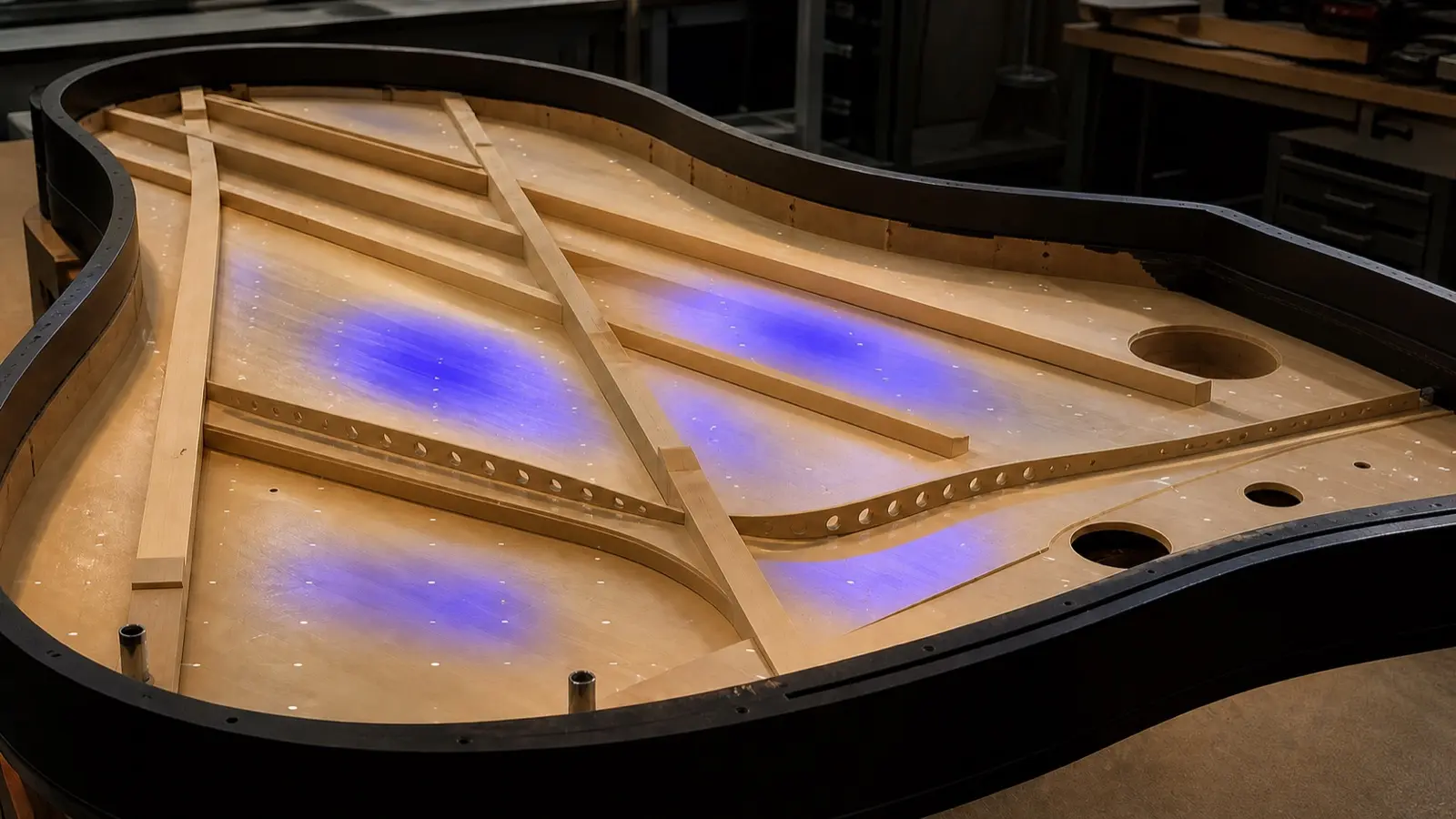
Map the structure behind timbre, projection and feel
The instrument-development decisions that need a spatial answer
Tune the body and soundboard
Compare plate, brace, bridge and boundary-condition response before deciding what to adjust.
Resolve unwanted resonances
Locate the structural feature behind a wolf tone, buzz, rattle or narrow-band colouration.
Compare prototypes and production variation
Build a repeatable response map across material batches, assembly variants or reference instruments.
Validate a physical or numerical model
Compare measured mode shapes and frequencies with an FE or physical model before trusting the next iteration.
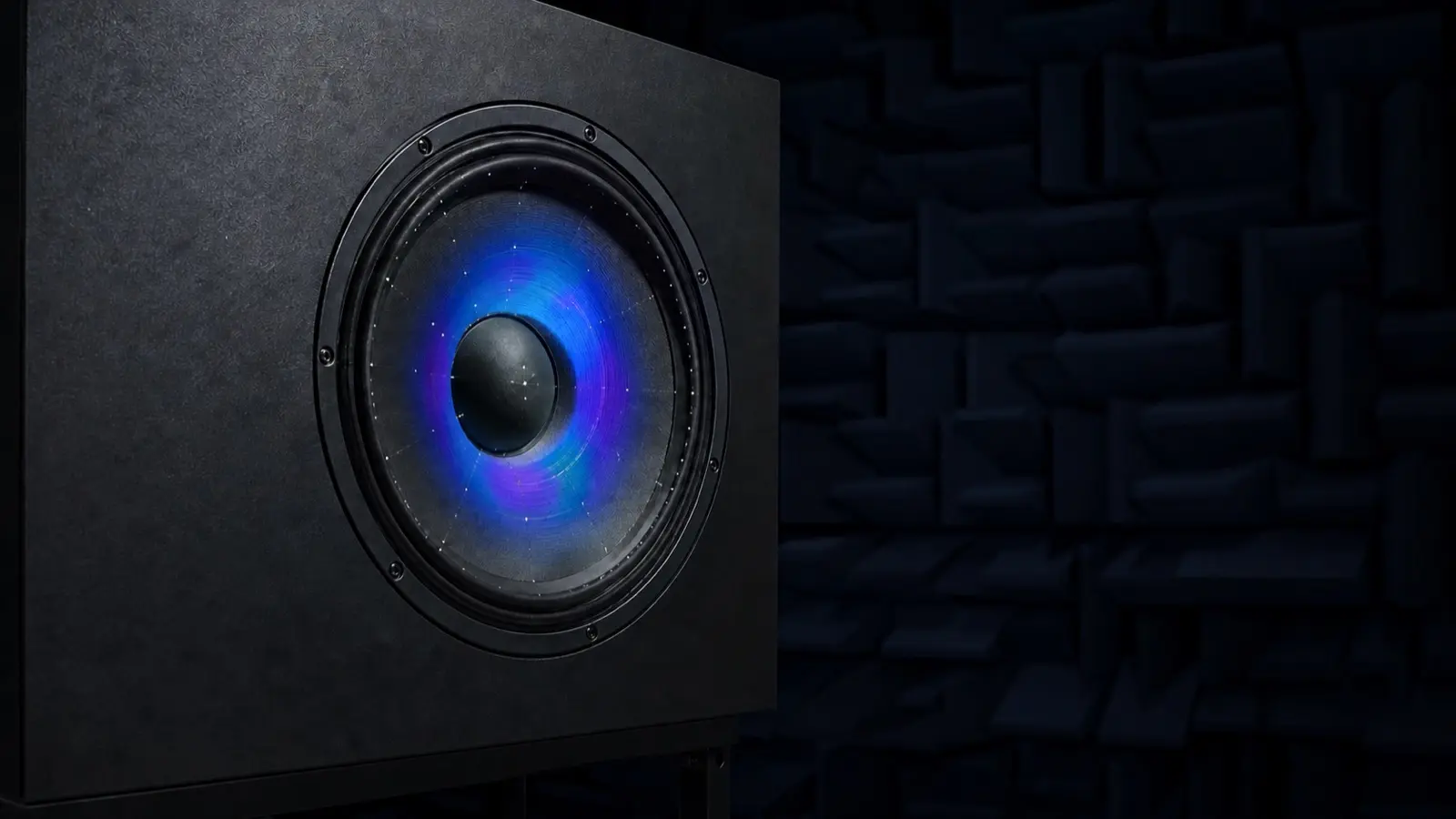
Find the mode behind a loudspeaker response problem
Use the signal that answers the instrument question
Microphones — acoustic outcome
Measure the sound at the listener or microphone position. Use them for sound-pressure, radiation and listening correlation.
Force input — controlled excitation
Define the input for a modal test. Use it when you need a controlled excitation and a transfer function.
Accelerometers — selected-point motion
Capture motion at selected points. Best for trusted references and known critical components.
QSeries Laser RADAR — spatial response
Map geometry and vibration across many points in parallel. Use it to show how the body, soundboard or diaphragm is moving.
Bring geometry and motion into the acoustic investigation
From result to design decision
Choose your next step
Explore Q1 Laser RADAR
Explore multi-point geometry and vibration measurement for focused structural studies.
Explore Q2 Laser RADAR
Explore the system for high-density, parallel measurement across larger or more complex targets.
Discuss your application
Bring the instrument, loudspeaker or component question to an applications engineer.