SEE MORE · KNOW MORE
Massively parallel Laser RADAR.
Geometry and vibration.
Ommatidia’s massively parallel Laser RADAR measures 3D geometry, vibration and motion across many points at once—without contact sensors.


Proven Success
You’re in good company. Engineering leaders around the world have made the switch to our next-generation Laser RADAR and LDV systems.

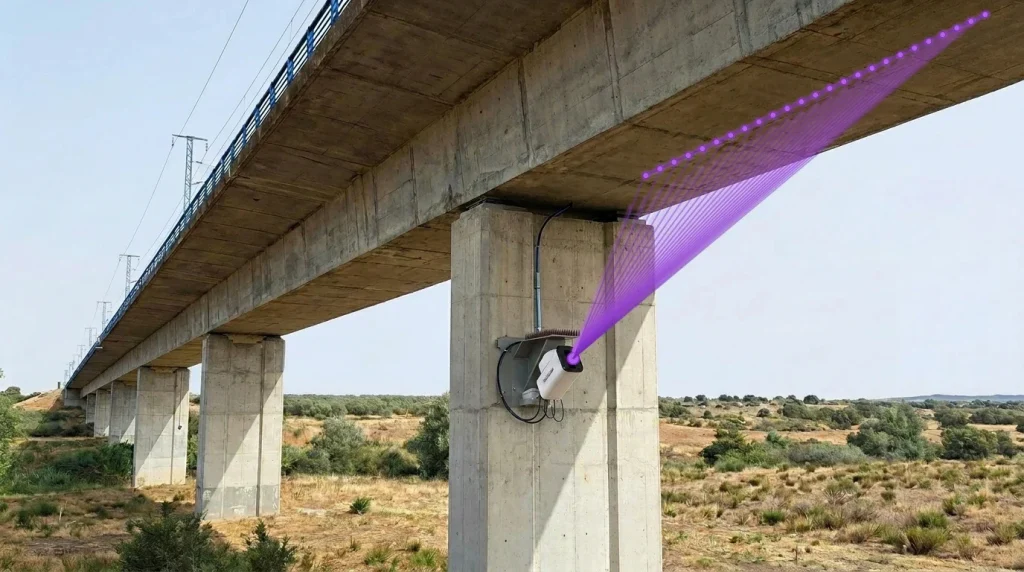
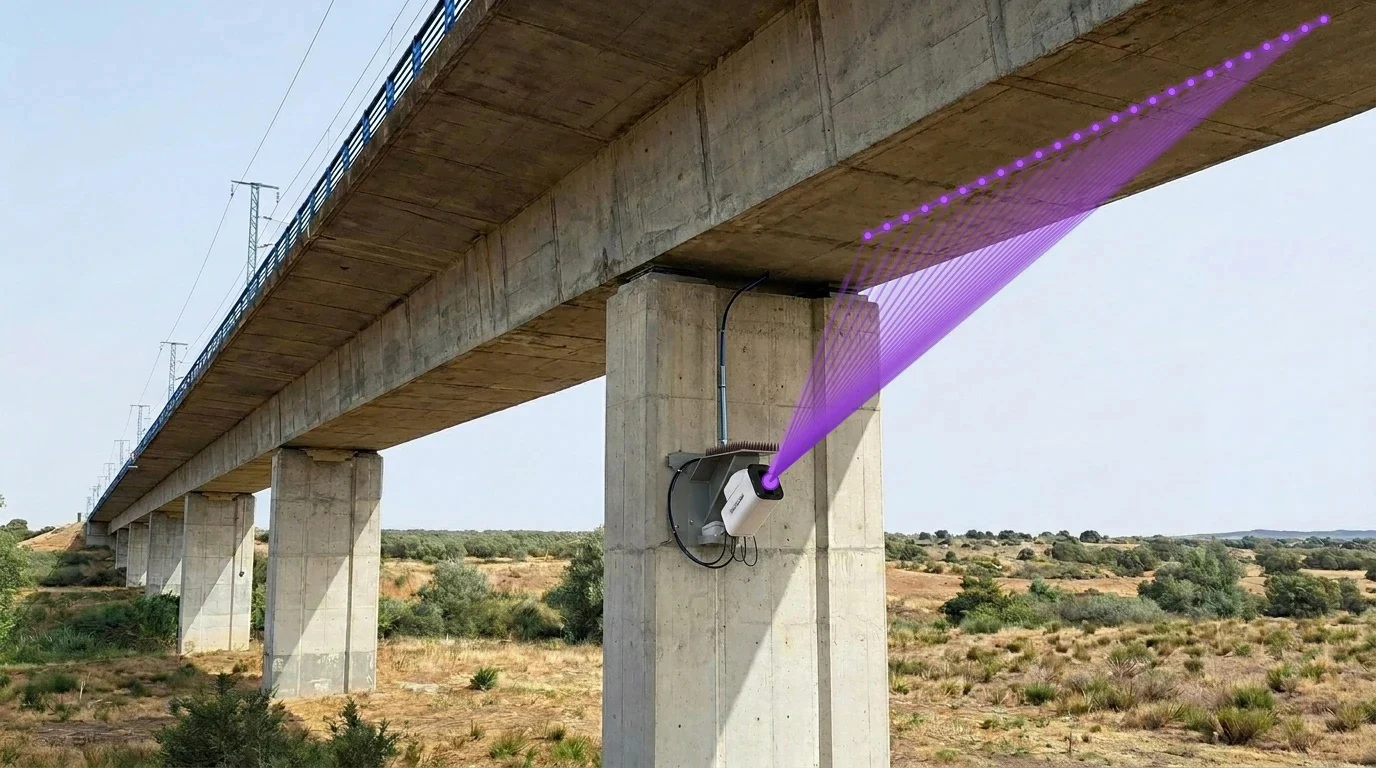
SHM High-Speed Train Viaduct

Large Deployable Mesh Reflector

Wind Blades

Dimensional metrology of a carbon fiber antenna and carbon fiber reflector modal analysis

Reactance vibration monitoring in electrical substations

Mechanical Engineering, Architecture and Construction

Near-surface geophysics

Power Transformers

Modal Analysis

Mechanical Engineering in Construction

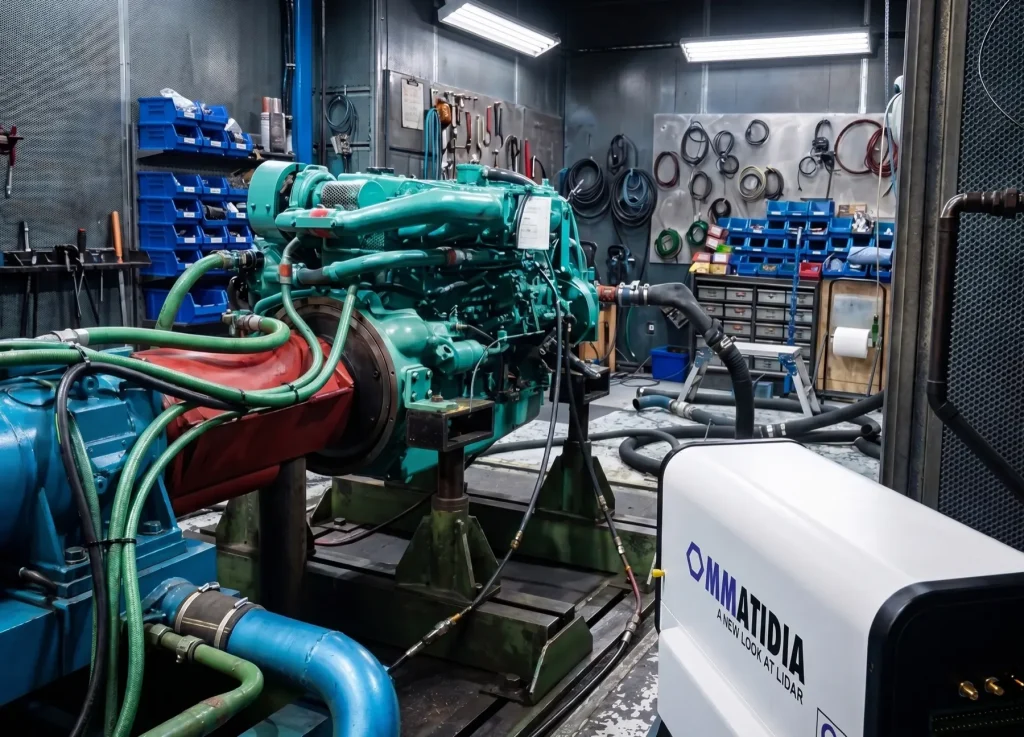
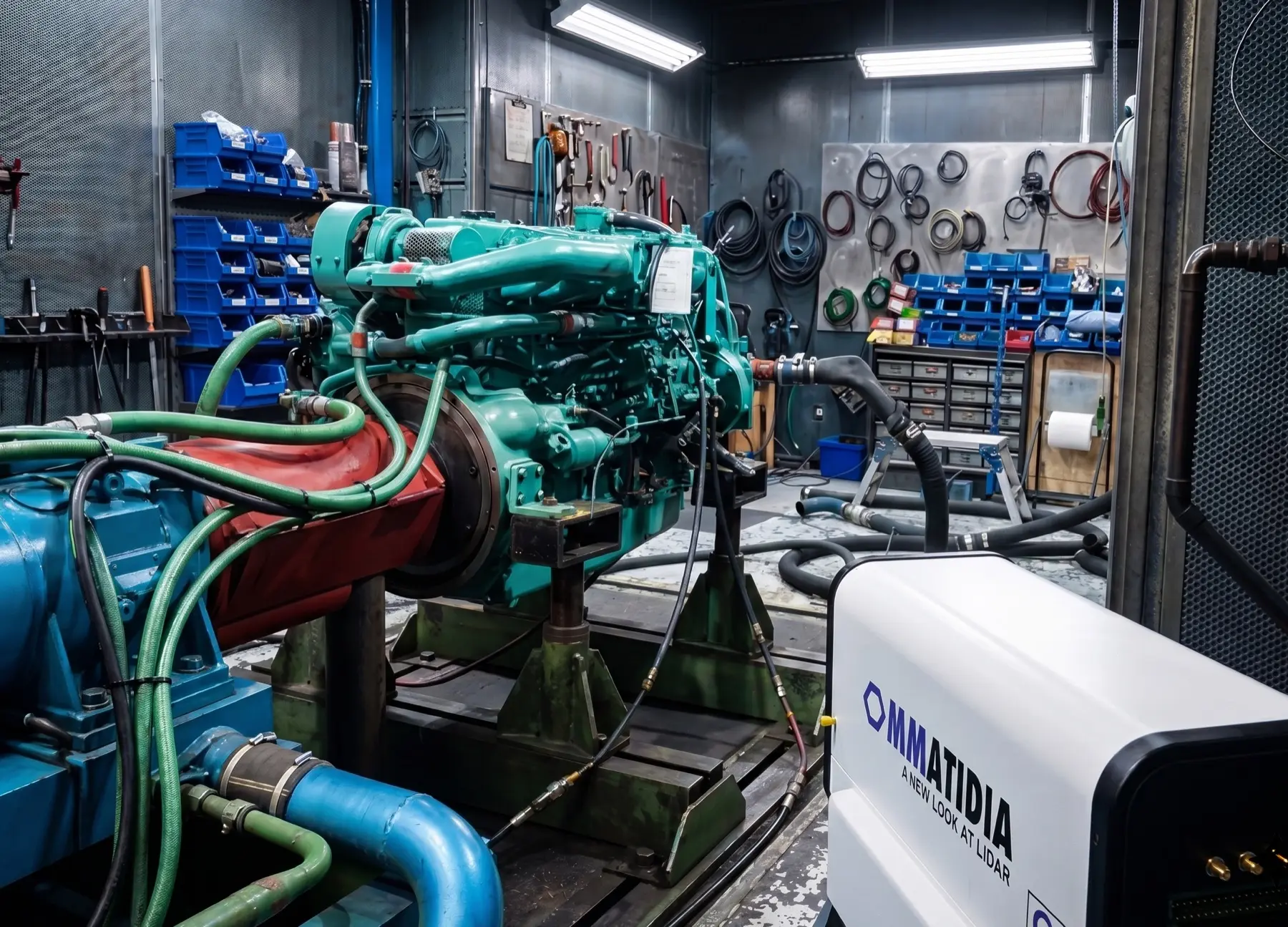
End-of-line testing
Discover our industry-leading Laser RADAR products.
- Q2S measures vibration simultaneously at 65 fixed points for remote, non-contact structural monitoring.
- Q1S Laser RADAR delivers fixed, non-contact structural monitoring for vibration, bridge deflection, long-term displacement, and strain-ready analysis.
- Remote industrial metrology and imaging vibrometry for large or difficult-to-access targets with one field-ready Q1 Laser Radar system.
- Q2 Laser RADAR combines full-field vibration measurement and 3D metrology with multi-view 3D velocity-vector reconstruction and geometry-linked strain calculation for automotive NVH and complex engineering targets.
- Affordable single-beam laser vibrometry for fast, high-dynamic-range measurements in entry-level and single-point applications.
- SpeedSync is a modular single-beam laser vibrometry head used with QMini and Q2, enabling synchronized non-contact vibration measurements from under 1 meter to 300 meters with ease.


Our Technology Revolutionizes 3D Vibrometry & Metrology.
A bee’s compound eye has 5000 ommatidia. Using them, it is able to fly at driving speed with sufficient accuracy to avoid predators and land on a tiny flower miles away from its hive.
Our technology mimics insect eyes to deliver extraordinary performance - namely, the ability to scan using multiple parallel laser beams simultaneously, greatly increasing the measurement efficiency over the traditional single-point LDVs or accelerometers.
Converge 3D Metrology & Vibrometry
The ability of Q series Laser Radars to perform the NDT Vibrometry and Micron-Level Metrology Measurements, enables end user to infuse the resulting acquired point clouds with precise respective vibrometry data.
Long Range for Large & Complex Geometries
Our sensors are sensitive to a single photon, providing a range that extends the limits of physics. In standard configuration Q series systems are calibrated to offer ranges up 50m.
Reliable, Compact & Affordable
Our sensors are manufactured using patented technologies that allow extraordinary performance and a compact design of our Laser Radars (< 7kg). Making them suitable for tripod installation, and carrying onboard of commercial airplanes.
Latest Application Examples & Use Cases


Questions engineers ask about Ommatidia Laser RADAR
Quick answers about measurement outputs, parallel acquisition and choosing a Q-Series workflow.
What does massively parallel Laser RADAR measure?
Ommatidia Laser RADAR measures non-contact 3D geometry, surface motion and vibration from a stand-off position. Q1 uses 128 parallel beams for rapid geometry and dimensional inspection. Q2 captures 65 vibration channels simultaneously and supports up to 1,300 measurement points with 20× oversampling for full-field dynamics. The useful output depends on the configured workflow, optical access, target return, range and validation plan.
How is parallel Laser RADAR different from single-point or scanning LDV?
A single-point laser Doppler vibrometer measures one location at a time, while a scanning LDV builds a spatial result sequentially. A parallel Laser RADAR captures many points at the same instant, reducing time skew when motion changes during a test. Scanning and parallel methods can both be valid; choose from the required point count, simultaneity, bandwidth, stand-off, surface return and the engineering result that must be validated.
Which Ommatidia Q-Series system fits which task?
QMini is the focused single-point vibration route. Q1S supports fixed, non-contact structural monitoring. Q1 is designed for long-range 3D inspection and metrology with 128 parallel beams. Q2 combines 65-channel simultaneous vibration acquisition with geometry-aware full-field workflows. Compare the required distance, spatial coverage, motion bandwidth, geometry accuracy and deployment model before selecting a system.
How should a team start a Laser RADAR feasibility review?
Define the decision the measurement must support, then share the target geometry and material, working distance, required accuracy, motion bandwidth, point count, environment and desired output. Include any reference sensor and acceptance criterion. Ommatidia can use that brief to recommend a Q-Series route and, when needed, a representative feasibility measurement before a full deployment.